InterPED is a European research project involving four universities (VUB, POLIMI, UBI, UPT) and twelve institutional and civil society partners in Belgium, Italy, Portugal, and Romania. It addresses acritical gap in current energy transition policies by focusing on intermediate territories—non-metropolitan areas characterized by dispersed settlements, productive landscapes, and hybrid urban-rural configurations.
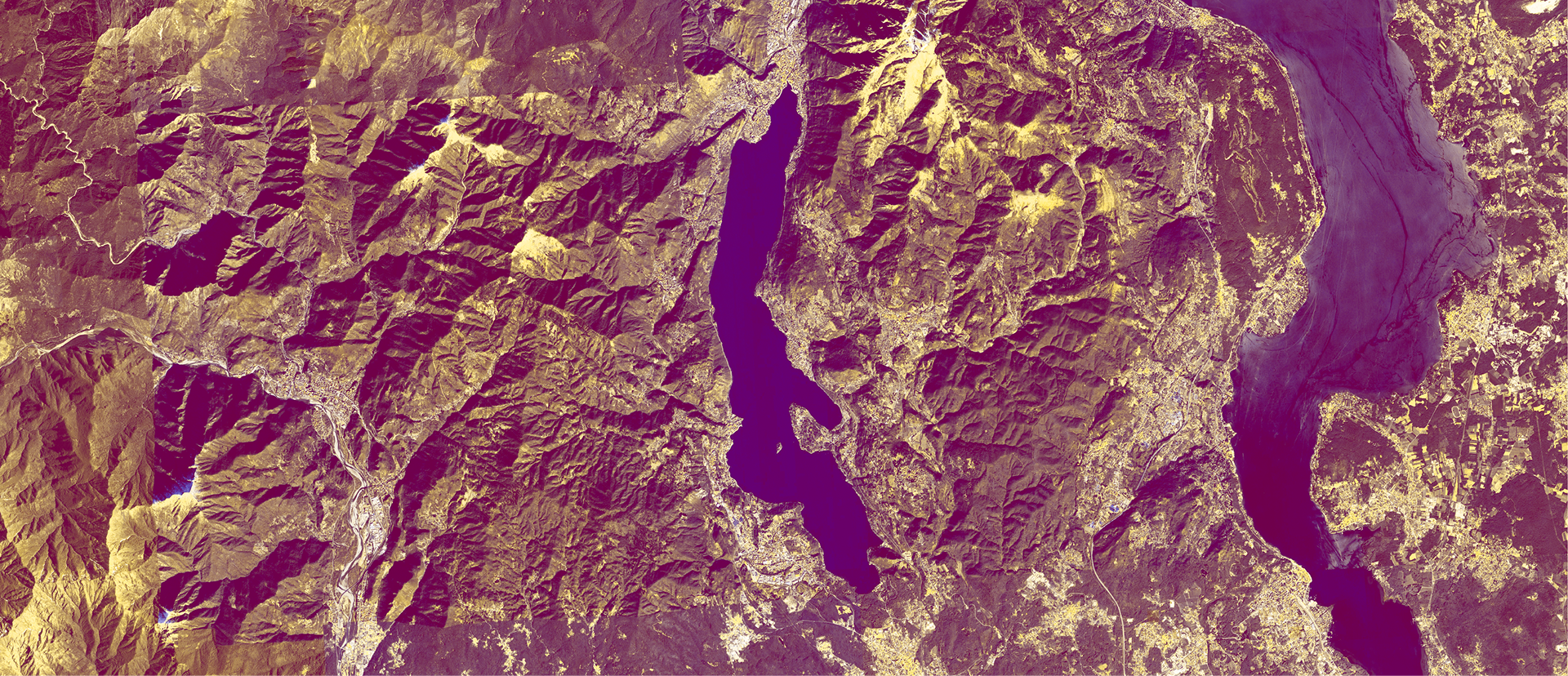
Building on a transdisciplinary and research-oriented approach, InterPED develops actionable strategies for implementing Positive Energy Districts (PEDs) in these often-overlooked contexts. The project employs a shared methodological framework based on reciprocal learning, combining comparative, qualitative, and design-based methods with stakeholder engagement and co-production processes.
The research is structured around thematic inquiries and situated experimentation in four selected territories, where living labs, workshops, and co-design sessions enable the integration of energy planning with governance, social inclusion, and spatial regeneration. InterPED’s ambition is to advance a context-sensitive and inclusive model of energy transition, contributing to both climate neutrality and territorial cohesion across Europe.
Milestones
WP1 – Management and Communications
WP2 – Knowledge Hub
WP3 – Alignment and Framing
1 Shared Archive
WP4 – Territorial Regeneration Strategies
1 Inter-territory energy mapping
2 Inter-territory policy-regulatory mapping
3 Inter-territory governance-social mapping
4 Co-Designed Inter-Territory Strategies/Scenarios
WP5 – Preparatory Phase
WP5 – PED Regeneration Strategies
Co-identify PED conditions
Co-design local PED strategies
WP6 – Strategies Replication
Mapping PED replication
Mapping inter-territories replication
Mapping national and international replication
WP7 – Dissemination, Communication, Exploitation
Partners
Vrije Universiteit Brussel (VUB)
Cosmopolis Centre for Urban Research
Fabio Vanin
Project coordinator
Professor of Landscape Urbanism at the VUB and co-founder of the LATITUDE Platform for Urban Research and Design. His expertise lies in research-by-design participatory processes and applied ethnography, with a focus on building shared visions among citizens, local stakeholders, and
Dieter Bruggeman
Postdoctoral researcher and lecturer in History and Theory of Urbanism. His work examines the continuous reorganization of territorial arrangements for collective services (energy, food, housing) as constitutive elements of urbanization. He has served as a member of PED Call II’s Expert Support Facility.)
Laura Shllaku
Doctoral researcher, urban planner, and designer, with substantial experience in urban energy transition processes and emerging models for climate-neutral, resilient, and livable neighborhoods.
with co-operation partners
Provincie Vlaams-Brabant
Politecnico di Milano (POLIMI)
DAStU–Dipartimento di Architettura e Studi Urbani

Cristina Renzoni
National coordinator
Associate Professor in Spatial Planning and Urban Design. Her research focuses on the history of urbanization, national and regional planning in post-war Italy, and the role of public services in contemporary European cities, with particular attention to educational facilities and educational poverty.
Gloria Pessina
Assistant Professor in Urban and Regional Planning. Her main research interests include territorial inequalities, energy transition, and environmental injustice.
Chiara Nifosì
Assistant Professor in Urban Design within the FSE REACT-EU Program – action IV.6 “Green and innovation issues relating to infrastructure and the green transition”.
Mattia Tettoni
Research Fellow and PhD Candidate in Urbanism at IUAV, Venice. His research focuses on the relationship between territory, landscape, and resource extraction, with particular attention to critical raw materials.
Maria Aldera
PhD Candidate exploring the territorial implications of new Renewable Energy Communities in medium-sized cities, polycentric urban networks, and diffuse urbanization.
Lorenzo Pagliano
Associate Professor in Building Physics and Building Energy Systems, with a strong specialization in energy planning and the reform of the built environment. Member of the project’s advisory board (WP1).
with co-operation partners
Comune di Omegna
Fondazione Museo Arti e Industria di Omegna
EcoMuseo del Lago d’Orta e Mottarone
Universitatea Politehnica Timișoara (UPT)
Ana-Maria Branea
National coordinator
PhD Architect, Associate Professor in Spatial Planning and Urban Design. Her research interests include urban theory and management, urban regeneration, and public participation.
Marius Stelian Găman
PhD Architect, Associate Professor in Spatial Planning and Urban Design. His work focuses on urban design, mobility infrastructure, and issues of urban sustainability and regeneration.
Mihai Danciu
Architect, Assistant Lecturer, and practitioner. His research and practice focus on urban theory, urban and territorial planning, and urban and community management. He coordinates projects ranging from participatory urban design to strategic planning.
Ștefana Bădescu
PhD Architect, Assistant Lecturer, and practitioner. Her areas of interest include urban history, urban theory, urban and territorial planning, regional cooperation, and community involvement in the preservation and promotion of local values. She coordinates projects of varying scales, from small-scale interventions to strategic planning.
with co-operation partners
Association for Integrated Territorial Development of Jiu Valley
Asociația Planeta Petrila
Asociația Urban Lab Valea Jiului
Universidade da Beira Interior (UBI)

Andreia Garcia
National coordinator
Architect, curator, researcher, and Vice Dean of the Faculty of Engineering at the University of Beira Interior. She is a PhD Architect and professor, working on topics related to climate change, ecological and energy transition. She runs an independent practice in design, editorial projects, and curatorship. She is Director of the Art(e)facts Biennial and served as Head Curator of the Portuguese Official Representation at the 18th International Architectural Exhibition – La Biennale di Venezia.
Pedro Gadanho
Architect, curator, author, and guest professor. A 2020 Loeb Fellow at Harvard University, he holds an MA in Art and Architecture and a PhD in Architecture and Mass Media. He was the curator of Contemporary Architecture at the Museum of Modern Art, New York (2012–2016), and the Founding Director of the Museum of Art, Architecture and Technology in Lisbon (2015–2019). In 2020–2021, he led a bid for European Capital of Culture 2027 by a coalition of 17 cities in Portugal’s interior.
Inês Campos
PhD in Architecture and Lecturer at the Department of Civil Engineering and Architecture since 2010, where she teaches Design I, II, and III. Her academic work focuses on architecture, modular system typologies, living space, ruins, and rehabilitation. She is a member of the Research Group on Architecture, Place and Landscape – ARCPLAND.
with co-operation partners
Municipio do Fundão
Municipio de Manteigas
Aldeias Históricas de Portugal – Associação de desenvolvimento turístico